...

SOP Adalah: Pengertian, Tujuan, Fungsi, dan Manfaat Standar Operasional Prosedur

Apa Itu SOP?

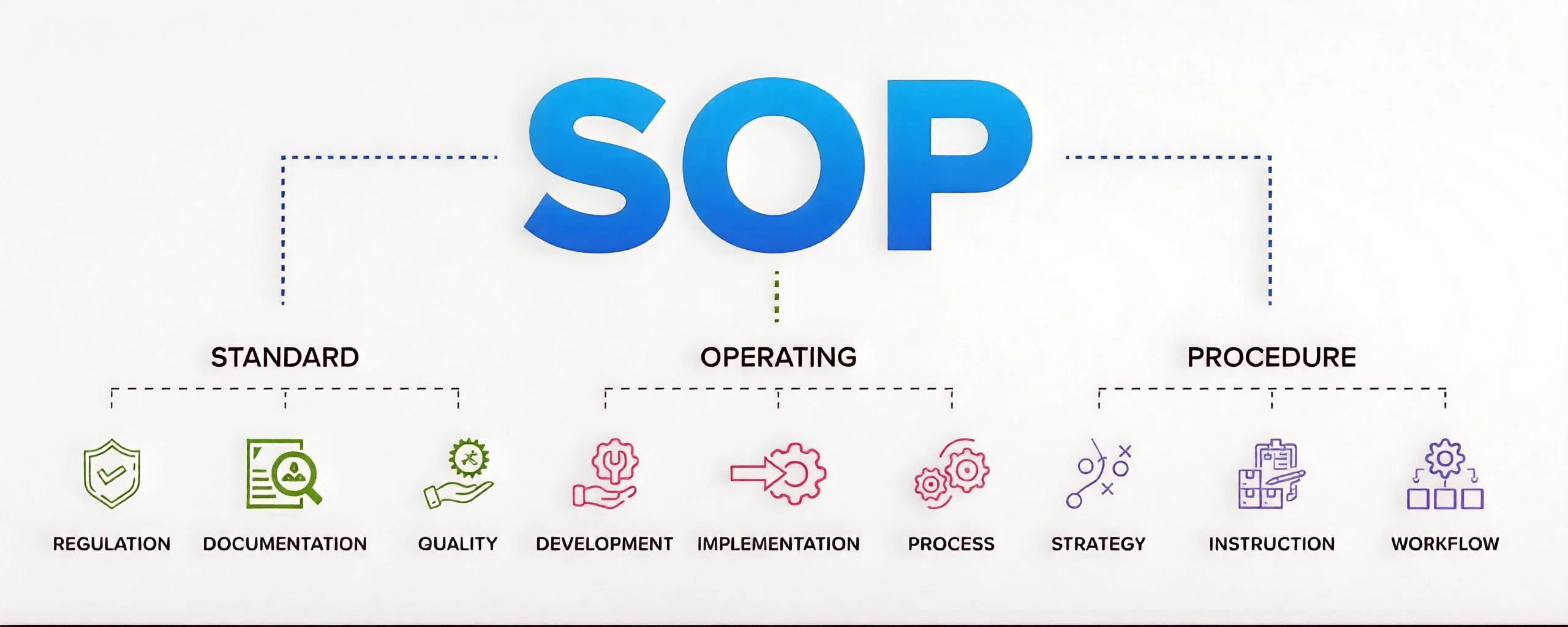
Standar Operasional Prosedur (SOP) adalah serangkaian langkah kerja yang disusun secara sistematis untuk memastikan proses operasional berjalan konsisten, efisien, dan sesuai standar. SOP menjadi pedoman resmi bagi karyawan agar memahami apa yang harus dilakukan, bagaimana melakukannya, kapan, di mana, dan siapa yang bertanggung jawab.

    • Menurut Sailendra, SOP adalah panduan agar kegiatan operasional perusahaan berjalan lancar.

    • Moekijat menekankan SOP sebagai urutan langkah pelaksanaan pekerjaan.

    • Insani mendefinisikan SOP sebagai dokumen resmi berisi instruksi tertulis yang baku.

Fungsi SOP

    1. Panduan Kerja – Memberikan arahan jelas bagi karyawan dalam melaksanakan tugas.

    1. Dasar Hukum – Menjadi acuan aturan dan konsekuensi jika terjadi pelanggaran.

    1. Informasi Pekerjaan – Menjelaskan tahapan kerja, hambatan, dan solusi.

    1. Disiplin Kerja – Menumbuhkan budaya kerja yang konsisten dan teratur.

Tujuan SOP

    • Meminimalisir kesalahan dalam proses kerja.

    • Memberikan pedoman baku bagi setiap karyawan.

    • Memudahkan adaptasi bagi karyawan baru maupun yang berpindah divisi.

    • Membantu perusahaan mencapai target dengan metode kerja efektif dan efisien.

Manfaat SOP

    • Meningkatkan reputasi perusahaan di mata klien.

    • Menghindari kebingungan karyawan terkait tugas dan tanggung jawab.

    • Alat koreksi untuk menelusuri kesalahan kerja.

    • Menjaga ciri khas dan standar kualitas perusahaan.

    • Memberikan aturan yang jelas terkait hak, kewajiban, dan sanksi.

Prinsip Penyusunan SOP

    1. Jelas dan mudah dipahami dengan bahasa sederhana.

    1. Efektif dan efisien dalam penggunaan waktu, tenaga, dan biaya.

    1. Selaras dengan visi, misi, dan tujuan perusahaan.

    1. Dinamis dan dapat diperbarui sesuai kondisi.

    1. Terukur agar mudah dievaluasi.

    1. Transparan dan terbuka untuk semua pihak.

    1. Memiliki kepastian hukum terkait aturan dan sanksi.

Tips Menyusun SOP Efektif

    • Gunakan visualisasi (diagram, bagan) agar lebih menarik.

    • Sesuaikan gaya bahasa dengan target divisi.

    • Perhatikan proses kerja di lapangan.

    • Lakukan uji coba SOP sebelum diterapkan permanen.

    • Pastikan setiap aturan memiliki alasan yang jelas.

    • Raih persetujuan semua pihak untuk menghindari konflik.

    • Tinjau dan evaluasi SOP secara berkala.

Source: https://katadata.co.id/ekonopedia/istilah-ekonomi/629f026292c44/sop-adalah-serangkaian-prosedur-kerja-ini-tujuan-dan-manfaatnya

      How Would You Like To Learn About TOPSOP
      Personalized 1:1 Demo
      Personalized 1:1 Demo

      Tailored walk-through
      Flexible with your Schedule

      Book a demo
      Contact Our Team
      Contact Our Team

      100+ features and many more
      Call Us Today

      +62 812-1291-115
      Recorded Overview
      Recorded Overview

      See our platform in action
      2 Minutes

      Watch Now

      Ensuring that Standard Operating Procedures (SOPs) run as planned throughout an entire organization can be challenging due to various factors:

      • Lack of Communication: Inconsistent communication about SOPs across different departments or teams can lead to misunderstandings or deviations from the established procedures.
      • Resistance to Change: Employees may resist adopting new procedures, especially if they perceive them as disruptive or if there’s a lack of understanding about the benefits.
      • Insufficient Training: If employees are not adequately trained on the SOPs, they may struggle to follow the procedures correctly, leading to errors and deviations.
      • Complexity of Procedures: Overly complex SOPs can be difficult for employees to comprehend and implement consistently. Simpler, more straightforward procedures are often easier to adhere to.
      • Lack of Accountability: Without clear accountability measures in place, employees may not feel compelled to follow SOPs rigorously, leading to deviations from the established processes.
      • Inadequate Monitoring: Regular monitoring and feedback are crucial for identifying deviations early on. Without a robust monitoring system, issues may go unnoticed until they escalate.
      • Inflexibility of SOPs: If SOPs are too rigid and don’t allow for adaptability to specific situations, employees may find workarounds or avoid following the procedures altogether.
      • Cultural or Organizational Barriers: Organizational culture and structure can sometimes create barriers to effective SOP implementation. A culture that does not prioritize adherence to procedures may hinder successful implementation.
      • Incomplete Documentation: If SOP documentation is incomplete or unclear, employees may struggle to understand and follow the procedures correctly.
      • Lack of Continuous Improvement: Organizations that do not regularly review and update their SOPs based on feedback and changing circumstances may find that procedures become outdated or ineffective over time.
      To address these challenges, organizations need a comprehensive approach that includes clear communication, effective training, continuous monitoring, and a culture that values and reinforces adherence to SOPs. Regular reviews and updates to procedures based on real-world feedback can also contribute to the ongoing success of SOP implementation.

      Standard Operating Procedures (SOPs) play a crucial role in the success and sustainability of a business, often being more important than the products or services it sells. Here are several reasons why SOPs take precedence:

      • Consistency and Quality Assurance: SOPs establish standardized processes for delivering products or services. This consistency is key for maintaining a high level of quality, meeting customer expectations, and building a positive reputation.
      • Efficiency and Productivity: SOPs streamline operations, reducing errors and redundancies. This efficiency not only improves productivity but also contributes to cost-effectiveness and resource optimization.
      • Compliance and Risk Management: In many industries, adherence to regulations and standards is paramount. SOPs ensure that operations comply with legal requirements, minimizing risks associated with non-compliance and potential legal consequences.
      • Training and Onboarding: SOPs serve as valuable training materials for new employees. They provide a structured guide for onboarding, helping new team members understand the processes and expectations quickly.
      • Adaptability and Scalability: Well-defined SOPs allow for easier adaptation to changes in the business environment or industry trends. They also facilitate scalability, making it easier to grow and expand operations without sacrificing quality.
      • Customer Satisfaction: Consistent and high-quality processes lead to satisfied customers. When customers can rely on a business to deliver as promised, it builds trust and loyalty.
      • Continuous Improvement: SOPs are not static documents; they should be regularly reviewed and updated. This commitment to continuous improvement ensures that the business remains agile, responsive to feedback, and capable of adapting to changing market conditions.
      • Employee Empowerment: Clear SOPs empower employees by providing guidelines for decision-making and problem-solving. This autonomy can lead to a more engaged and motivated workforce.

      While products and services are undoubtedly important, having robust SOPs in place ensures that the processes involved in delivering those products or services are efficient, reliable, and aligned with organizational goals. In essence, SOPs form the backbone of a well-organized and successful business.

      With a decade-long legacy, Imaginarium stands at the forefront of Digital Creative Consulting and IT Solutions, driving business performance through innovative technology. Our crowning achievement, TOPSOP, reflects over 10 years of expertise in crafting industry-specific software solutions.

      In our journey, we’ve identified a common challenge in digital transformation. While all businesses strive to digitize their standard operations (SOP), automating daily processes across divisions for enhanced efficiency and measurability, they are rooted in unique operational styles. Often, they hesitate to alter well-established formulas. Although customizing applications to specific needs seems like a solution, it can lead to a critical flaw – the business formula evolves, leaving the application outdated.

      We’ve witnessed numerous instances where corporations invested significant resources into developing an ideal app, tailored precisely to streamline their daily operations. However, upon its launch, the app often met with resistance from staff members who were hesitant to embrace it. Their reluctance stemmed from concerns about investing additional time in new tasks, undergoing training, and adapting to changes that could potentially disrupt their workflow.

      From these experiences, we’ve gleaned a crucial lesson: when pursuing digital transformation initiatives, it’s imperative to ensure that the core functions of daily operations remain intact. The system must possess the flexibility to accommodate existing workflows and empower employees to work efficiently without unnecessary disruptions. What’s needed is a dynamic workflow that can evolve in response to real-world operational challenges, adjusting seamlessly as circumstances change. Based on our comprehensive analysis and findings, we’ve formalized the concept of TOPSOP (Tailored Operational System with Agile Processes). This framework embodies our understanding of the importance of aligning digital innovations with the practical needs and workflows of businesses, ensuring smooth transitions and sustained success in the evolving landscape of modern enterprise.